


The Claude Opus 4.6 was launched on Feb 5, 2026, which, according to the coding benchmarks, is best for coding, and in the SWE benchmark, it scores one point lower than the Opus 4.5, but in the terminal benchmark, it surprisingly takes a lead, which seems pretty excellent, and I have been trying this model in .NET and C++ and C# coding, and it’s good, and it outshines the other models, and it’s equal to or close to the 5.3 Codex from OpenAI.
Coding
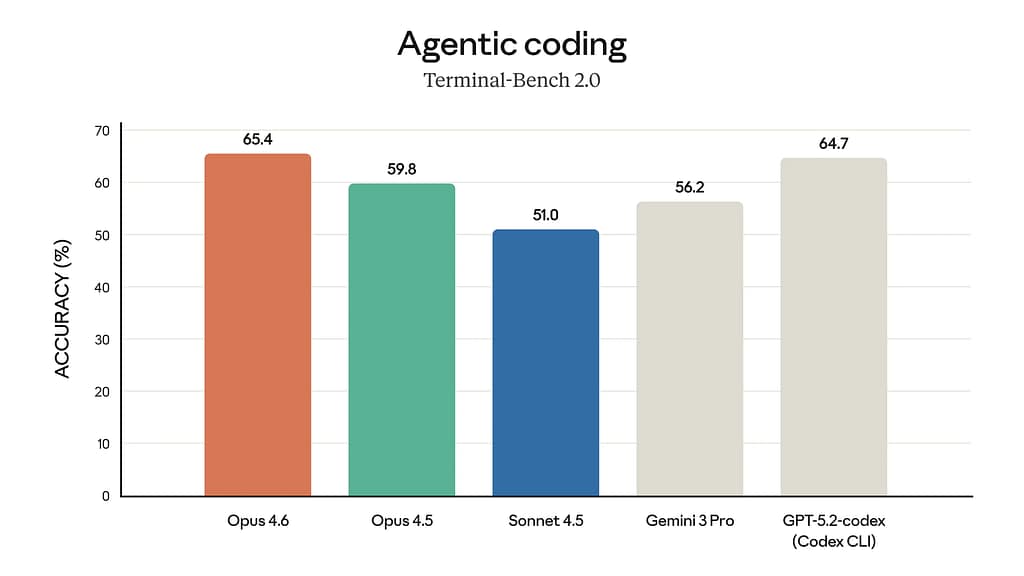
The Claude Opus 4.6 is the first model from Anthropic to feature a 1M context window, which is excellent if you want to code for longer sessions without repeatedly explaining the tasks – a problem encountered with the 256k context window. We are testing both the Opus 4.5 and 4.6, and in our testing, the coding performance was better with Opus 4.6. While the difference was not vast, it felt better overall.
The thinking process has been changed in GitHub Copilot for Opus 4.6. The new model reads the folders in the codebase directly and suggests improvements based on that context, rather than focusing on which file you are checking and providing partial enhancements. The thinking time with version 4.5 was longer, and although it may have completed the thought process, it tended to prolong decision-making. While I am not sure if this is an issue specific to GitHub Copilot, though, it seems the 4.6 version excels in its thinking process.
Improvements
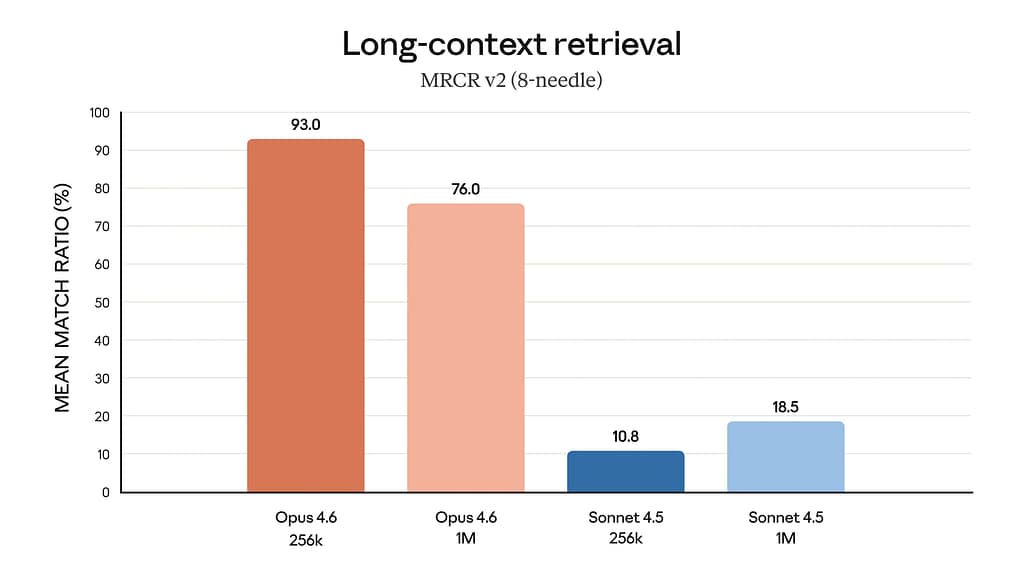
The improvements in the newer models address an issue found in older models. When older models were given a long context or a large number of tokens, their performance would degrade compared to their initial state. The MRCR v2 shows enhancements over the Opus 4.5 in the long context reasoning. The Sonnet 4.5 scores just 18.5%, and the Opus 4.5 at 76% excels in software failure diagnosis, which is an excellent thing.
Pricing and Availability
The Claude Opus 4.6 is priced the same as the 4.5, which is $5 for the base input tokens, and it’s still available for the Pro and Max plans only. So, if you want to try the Opus 4.6, you have to buy the Pro plan, and the pricing is similar on the other platforms, like still 3x on the GitHub Copilot if you want to use the model. The Opus 4.6 supports outputs of up to 128k tokens, which lets Claude complete larger tasks without breaking them into multiple requests. The model has four effort modes, namely medium, high (which is the default), max, and adaptive thinking, which lets Claude decide when deeper reasoning would be useful.
Security
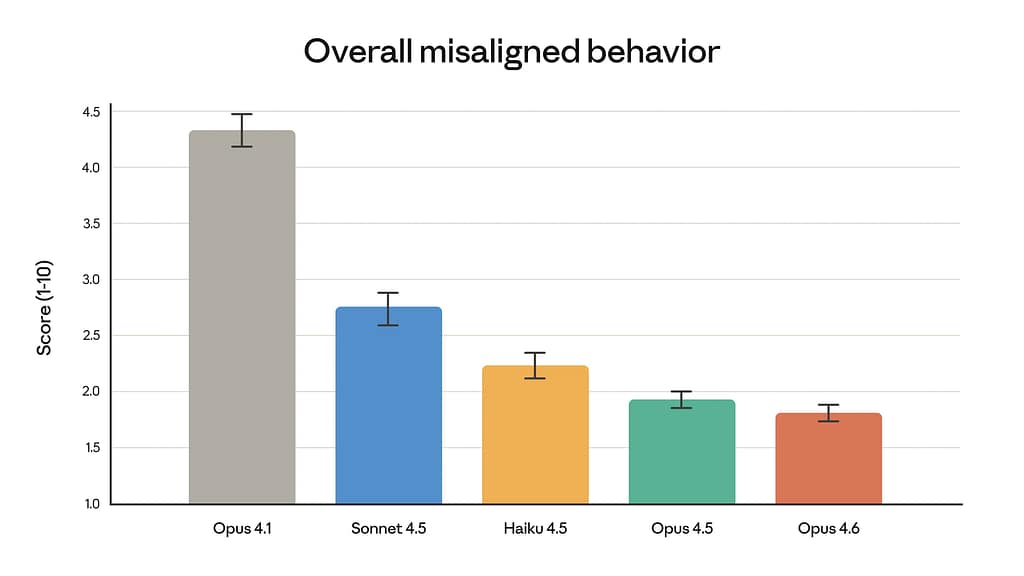
The Claude Opus 4.6 reduces the overall misaligned behaviour again since it reduces the rate from 4.5, which was one of the best models for Claude. Opus 4.6 also has the lowest rate of refusals among all Claude models, meaning it is less likely to fail in responding to user queries. Anthropic has also added new evaluations for user well-being, more complex tests for the model to refuse any potentially dangerous requests, and updated evaluations of the model to prevent it from inadvertently taking harmful actions. Additionally, they have developed six cybersecurity probes to help them track different forms of potential misuse.
Performance
The Claude Opus 4.6 is indeed faster, particularly in coding tasks, compared to previous model generations. It may reduce the time you might have to spend with the model, which is a great improvement, and with the new addition of up to 1M context tokens and 128k output tokens, it will contribute to this efficiency. More context tokens mean there’s less need to explain the model, as it can handle more information at once. Furthermore, a greater number of output tokens allows for more corrections and increased coding capacity in a single session.
We hope that you have enjoyed this article. For more information on electric vehicles, artificial intelligence, innovation, and the technology that will shape the future, continue to browse TechOrbis. At TechOrbis, our aim is to provide insightful analysis, honest views, and meaningful perspectives that extend beyond the news.
Follow TechOrbis on X (formerly Twitter), Instagram, and LinkedIn to keep up with the latest news, trends, and tech talk. As a growing and independent source of news, every view, share, and mention helps us reach more people and continue to provide meaningful tech journalism.


